Types of Essential Oil Diffusers: A Complete Guide
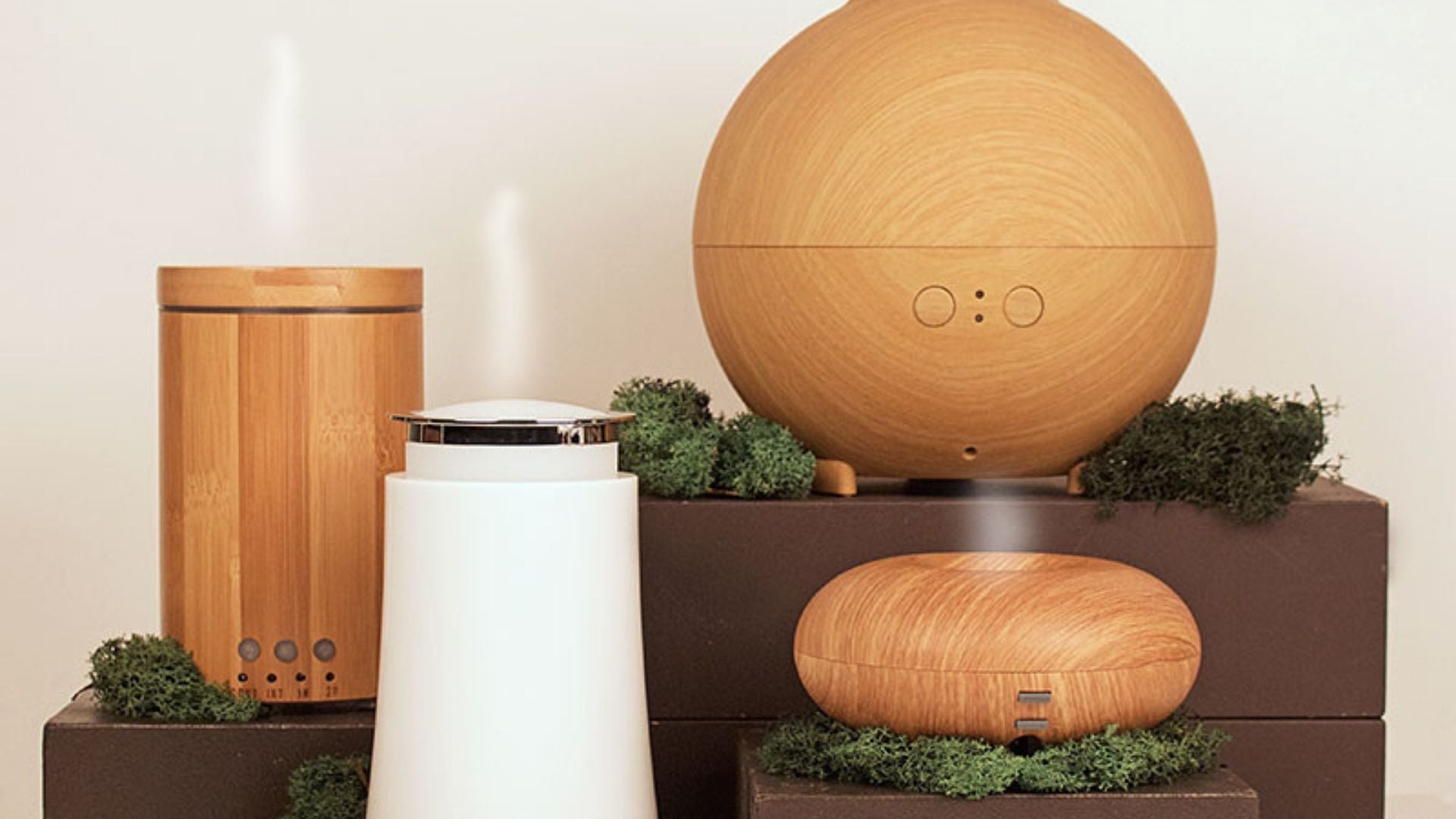
Not all diffusers are created equal. Whether you are new to aromatherapy or looking to upgrade your setup, understanding the different types of essential oil diffusers helps you get the most out of every blend. Here is everything you need to know.
Why the Type of Diffuser Matters
The diffuser you choose affects how much scent fills the room, how long the aroma lasts, how much oil you use, and whether the therapeutic compounds in the oil are preserved. Some methods are better for large rooms; others are perfect for a desk or bedside table. Some are completely maintenance-free and others need regular cleaning. Knowing the difference saves you money and gets you better results.
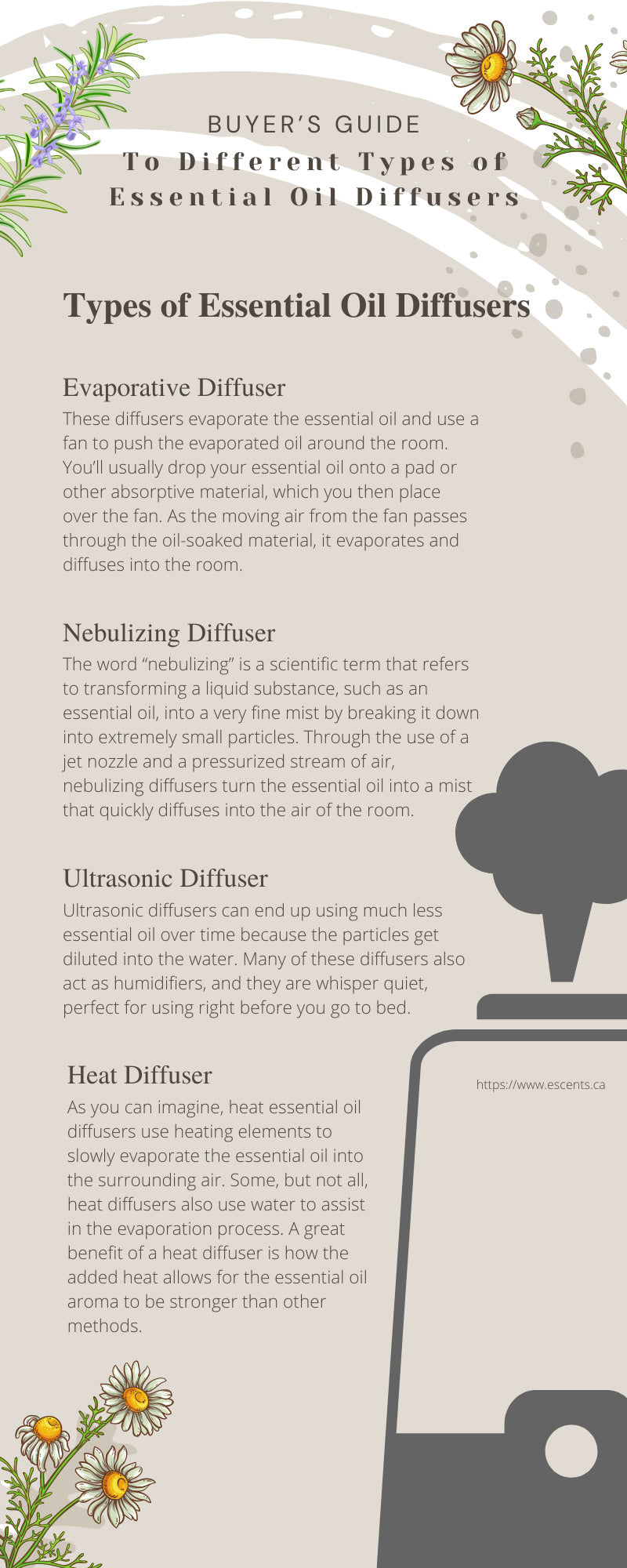
1. Ultrasonic Diffusers
The most popular type for home use. Ultrasonic diffusers use high-frequency vibrations to break water and essential oil into a fine cool mist that disperses into the air.
How they work: Add water to the reservoir, drop in 5 to 15 drops of essential oil, and the unit does the rest. The mist is cool with no heat involved, which means the oil's natural compounds stay intact.
Best for: Bedrooms, living rooms, offices and any everyday space. They also double as a humidifier, which is a bonus in dry climates.
Pros:
- Affordable (most models under $50)
- Easy to use and clean
- Covers medium to large rooms effectively
- Adds gentle humidity to dry air
Cons:
- Dilutes the oil with water, so scent is lighter than some other methods
- Works best with distilled or filtered water
- Needs regular cleaning to prevent mold buildup
Escents tip: Our Unwind blends like lavender, chamomile and cedarwood are especially beautiful in an ultrasonic diffuser before bed.
2. Nebulizing Diffusers
Nebulizing diffusers are the most powerful option. They use pressurized air to atomize pure essential oil directly into ultra-fine particles with no water and no heat.
How they work: Oil is drawn up from a reservoir and broken into micro-particles that hang in the air longer than mist. The concentration of aromatic compounds in the air is significantly higher than with other methods.
Best for: Large spaces, therapeutic use, or when you want a strong, long-lasting scent without compromise.
Pros:
- Strongest scent output of any diffuser type
- No dilution, so you get full therapeutic potency
- No water or heat means nothing degrades the oil
Cons:
- Uses more oil than other methods
- Higher price point (typically $80 to $200+)
- Can be loud
- Thicker oils like vetiver or sandalwood can clog them
Escents tip: Nebulizers work best with lighter, more fluid oils. Our Uplift collection of citrus and bright floral blends performs beautifully in a nebulizer.
3. Reed Diffusers
Reed diffusers are the low-maintenance option that works around the clock. Rattan or fibre reeds sit in a bottle of oil and carrier blend, absorbing the liquid and slowly releasing fragrance into the air.
How they work: No electricity, no timers, no effort. The reeds wick the oil upward and diffuse it passively. Flip the reeds every week or two to refresh the scent.
Best for: Bathrooms, entryways, hallways and anywhere you want a consistent ambient scent without fuss.
Pros:
- Set it and forget it. Works 24/7
- No electricity or water needed
- Safe around pets and children (no heat or steam)
- Elegant, decor-friendly design
Cons:
- Scent is subtle and not suitable for large or ventilated rooms
- Cannot control intensity on demand
- Reed bottles eventually need replacing
Escents tip: For a reed diffuser, choose a blend you want as a constant background note. Something grounding and warm like cedar, sandalwood or vanilla works beautifully.
4. Heat Diffusers (Electric or Candle)
Heat diffusers warm the essential oil to help it evaporate and fill the air. This includes electric heat diffusers and traditional candle-warmed oil burners.
How they work: A small amount of oil, sometimes mixed with water, sits in a dish above a heat source. The warmth drives the volatile compounds into the air.
Best for: Ambiance and light fragrance in smaller spaces.
Pros:
- Simple and inexpensive
- Creates a warm, cozy atmosphere especially with candle burners
Cons:
- Heat degrades the therapeutic compounds in the oil
- Less effective for aromatherapy benefits; better for fragrance only
- Candle burners require supervision
Escents tip: If you are using a heat diffuser primarily for fragrance, our Fresh collection of bright, clean and herbaceous blends holds up well even with gentle heat.
5. Car Diffusers
Car diffusers are compact units designed to plug into your vehicle's USB port or 12V outlet and diffuse oils while you drive. Some are simple felt-pad holders that clip to an air vent.
How they work: Most plug-in car diffusers work like a small ultrasonic unit or simply use airflow from the vent to carry scent from an oil-soaked pad.
Best for: Commutes, road trips and keeping the car fresh without synthetic air fresheners.
Pros:
- Keeps your car smelling clean and natural
- Some oils support focus and alertness while driving
- Small, portable and discreet
Cons:
- Limited scent output in a ventilated vehicle
- Vent clips can reduce airflow
Escents tip: Peppermint and citrus blends are classic choices for the car. Refreshing and great for alertness. Try our Uplift blends for the morning commute.
6. Personal Inhalers
Personal aromatherapy inhalers are small, lipstick-sized tubes with an oil-soaked wick inside. You hold them to your nose and inhale directly, delivering concentrated aromatherapy benefits more efficiently than any room diffuser.
Best for: On-the-go use, targeted needs like stress, headaches, nausea or focus, or when you do not want to scent an entire room.
Pros:
- Highly portable and fits in a pocket or bag
- No setup, no cleaning, no water
- Delivers the most direct therapeutic benefit
- Lasts 6 to 12 months before the wick needs refreshing
Cons:
- Personal use only and does not fill a room
Escents tip: Our Aroma Roll-Ons serve a similar purpose. Pre-blended, portable and ready to use anywhere.
How to Choose the Right Diffuser for You
| Your situation | Best choice |
|---|---|
| Everyday home use | Ultrasonic diffuser |
| Large open-plan space | Nebulizing diffuser |
| Constant ambient scent | Reed diffuser |
| Decor and ambiance only | Heat diffuser or candle burner |
| In the car | Car diffuser or vent clip |
| Desk, travel or targeted use | Personal inhaler or roll-on |
A Note on Oil Quality
The best diffuser in the world will not help if the oil inside is synthetic or adulterated. Synthetic fragrance oils and low-quality essential oils can release irritants when diffused, which is particularly problematic with ultrasonic and nebulizing diffusers that maximize airborne particles.
Every Escents blend is made from 100% pure, naturally sourced essential oils, the same quality that Jacqui MacNeill started blending by hand in Vancouver in 1992. No synthetic fragrance. No fillers. Browse our full collection to find your next blend.
You Might Also Love
-
Roll-on Head Aid
Regular price From $35.00Regular price -
Roll-On Itch B'gone
Regular price From $35.00Regular price -
Bug Off Spray
Regular price $16.00Regular price